A men's shalwar kameez typically needs about 4.5 metres (about 5 yards) of 44-inch fabric for an average adult. A men's kurta needs 2.5 to 3 metres, a women's three-piece suit about 6.75 to 7.5 metres, and a saree is usually 5.5 metres plus a blouse piece of 0.8 to 1 metre. Width, size, length and flare change these figures.
The figures below are typical ranges drawn from published guides by tailors and fabric retailers in Pakistan and India, each linked so you can check them. They are a starting point for buying, not a cutting plan. Your tailor's estimate, based on your measurements and the exact style, is the number to trust before you cut.
How much fabric does each garment need?
| Garment (adult, average size) | 44-45 inch fabric | 56-60 inch fabric | Notes |
|---|---|---|---|
| Men's kurta (knee length) | 2.5-3 m (2.7-3.3 yd) | about 2.25-2.5 m (2.5-2.7 yd) | Long kurta about 2.5 m; a full-sleeve men's shirt is 2.75 m at 44 inches and 2.25 m at 56-60 |
| Men's shalwar kameez | 4.5 m (4.9 yd) | from 4 m (4.4 yd) | Kameez about 2.5 m, shalwar about 2 m; many tailors still ask for 4.5 m on wide fabric |
| Men's kurta pajama | about 4 m (4.4 yd) | less | Narrower pajama than a shalwar |
| Sherwani (outer fabric) | 3 m (3.3 yd) | 2.5 m (2.7 yd) | Lining is bought separately |
| Women's short kameez or kurti | 2-2.5 m (2.2-2.7 yd) | about 2 m (2.2 yd) | Hip to knee length |
| Women's long kameez or kurta | 2.5-3.5 m (2.7-3.8 yd) | about 3 m (3.3 yd) | Calf length and full sleeves need the upper end |
| Salwar | 2.5 m (2.7 yd) | 2 m (2.2 yd) | Patiala or heavily gathered styles need more |
| Straight trouser or cigarette pants | 2-2.5 m (2.2-2.7 yd) | 1.5-2.25 m (1.6-2.5 yd) | Palazzo 2.5-3 m |
| Dupatta | 2.25-2.5 m (2.5-2.7 yd) | 2.25-2.5 m (2.5-2.7 yd) | Usually sold as a finished piece |
| Saree | 5.5 m (6 yd); 6 m with a longer pallu | same | Commonly woven about 1.15 m (45 inches) wide |
| Saree blouse piece | 0.8-1 m (0.9-1.1 yd) | about 0.75 m (0.8 yd) | Often attached to the saree; long sleeves need more |
| Lehenga skirt | 3-4.5 m (3.3-4.9 yd) | about 3.5 m (3.8 yd) | Kali and can-can styles with a wide hem need more |
| Abaya (full length) | 3-4 m (3.3-4.4 yd) | less | Wide sleeves, overlays and height add fabric |
Yards are metres × 1.094, rounded. A blank or "less" means the sources gave no reliable figure for that width.
How much fabric for a men's shalwar kameez by size?
Most Pakistani tailors work from 4.5 metres as the standard for an average adult man on 44-inch cloth, and Alkaram gives a range of 4.5 to 5.5 metres depending on height and design. Shalibas publishes a more detailed chart, summarised here.
| Wearer | Fabric | Yards (approx.) |
|---|---|---|
| Adult, slim | 4 m | 4.4 yd |
| Adult, average | 4.5 m | 4.9 yd (ask for 5) |
| Adult, large or tall | 5 m | 5.5 yd |
| Boy, 13-16 years | 3.5-4 m | 3.8-4.4 yd |
| Boy, 8-12 years | 3-3.5 m | 3.3-3.8 yd |
| Child under 8 | about 2.5 m | about 2.7 yd |
Based on 44-inch fabric. Source: Shalibas.
How much fabric for a women's suit, saree or lehenga?
For a women's three-piece suit, Stilento puts the total at 6.75 to 7.5 metres: about 2 to 2.5 m for the kameez, 2.5 m for the salwar and 2.25 to 2.5 m for the dupatta. Utsav Fashion gives a standard of about 2.5 m each for kameez, bottom and dupatta, and 3 to 3.5 m for an abaya-style kameez.
A standard saree is about 5.5 metres long and 1.15 metres wide, with a blouse piece of about 80 cm, according to Utsav Fashion. The Tirumala Designers fabric estimator allows 6 metres for a longer pallu and 1 metre for a blouse on 44-inch fabric.
For a lehenga choli, Utsav Fashion's standard is about 3 m for the lehenga, 1 m for the choli and 2.5 m for the dupatta, while Tirumala allows 4.5 m for the lehenga on 44-inch fabric. The gap is flare: a skirt with many kalis (panels) and a wide hem can take considerably more.
How much fabric for a sherwani, abaya or girls' frock?
A sherwani coat typically needs about 3 metres of 44-inch fabric or 2.5 metres of 56 to 60-inch fabric (Tirumala). Lining is extra; Shalibas budgets about 4 metres of lining for a sherwani. Add the trouser or churidar separately.
A full-length abaya typically needs 3 to 4 metres, depending on the wearer's height and the design (Regal Fabric Gallery). Wide butterfly sleeves, overlays and layered panels push it to the upper end.
A gathered girls' frock for ages 8 to 10 typically takes 1.2 to 1.4 metres, depending on length and sleeves (Dinesh Exports). Younger children need less, and a full-length frock or a very full skirt needs more.
See the fabric stitched before you buy it
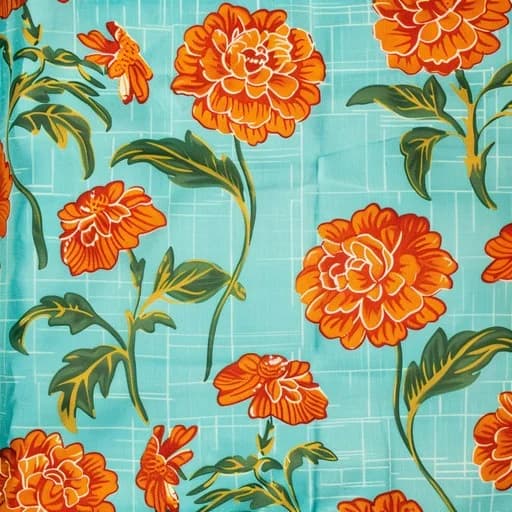 Fabric
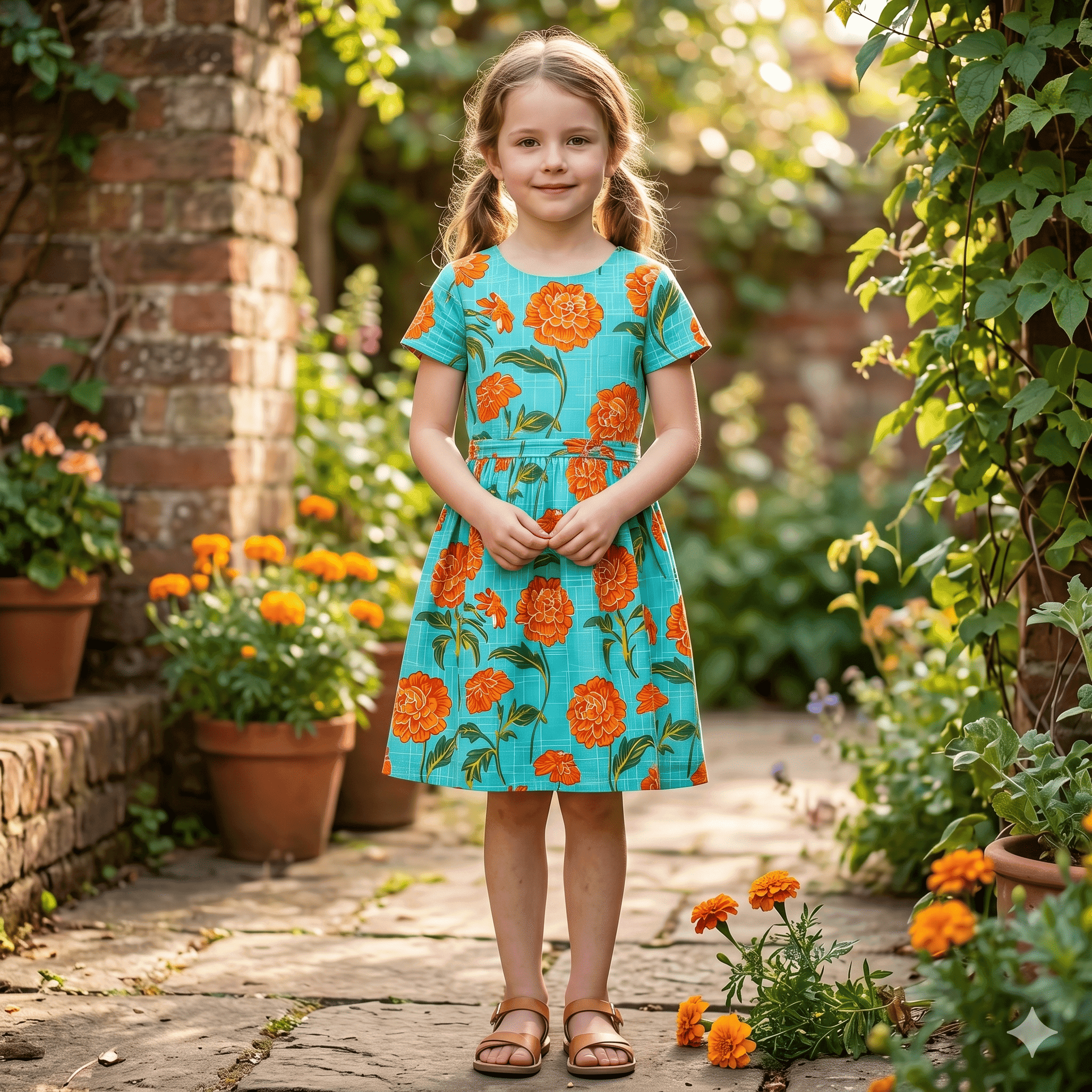 Preloom output
Preview the garment before you cut
Knowing the metres is half the decision. The other half is whether the print will actually look good as that garment. A large motif that looks striking on the bolt can be cut off awkwardly on a small frock; a bold stripe can overwhelm a long kurta.
Preloom turns a photo of the fabric into a photoreal preview of the stitched garment, usually within a minute, so you can see the print as a kurta, a frock or an abaya before you buy or cut it. It is a visualization, not a tailor's pattern, but it answers the question "will I like this once it is made?" See the fabric to garment guide for how it works.
What changes how much fabric you need?
| Factor | Typical adjustment |
|---|---|
| Taller wearer (over 6 feet, or inseam over 32 inches) | Add about 0.5 m to a men's suit |
| Heavier build (waist over 40 inches or chest over 46 inches) | Add about 0.5 m to a men's suit |
| Large and plus sizes (women's wear) | Add 0.5-1 m |
| Longer kameez (mid-thigh or below) | Add 0.3-0.5 m |
| Stripes, checks or a one-way print that must be matched | Add about 0.5 m |
| Three-piece with waistcoat | Add about 1.5 m, plus lining |
| More flare (anarkali, sharara, kali lehenga) | Can add metres; an anarkali starts from about 5 m |
| Shrinkage and cutting waste (bulk production) | Factories typically add about 5% for shrinkage and 3-5% for wastage |
Sources: Shalibas (men's adjustments), Tirumala Designers (plus sizes, anarkali), Dinesh Exports (production allowances).
Does fabric width change how much you need?
Yes. Wider fabric lets the tailor lay pattern pieces side by side, so you need less length. The usual widths are 44 to 45 inches (about 112 to 115 cm), common for lawn, cotton and many suit fabrics, and 56 to 60 inches (about 142 to 152 cm), common for wash-and-wear and suiting. That is why the table above shows two columns.
Narrow handloom fabrics of around 36 inches (about 91 cm), such as some khaddar and khadi, are harder to estimate. Front and back pieces often cannot sit side by side, so you need noticeably more length than at 44 inches. We did not find reliable published figures for 36-inch cloth, so take your measurements and the fabric width to your tailor before buying. Always check the width on the label: two suits sold as "3 metres" can hold very different amounts of fabric.